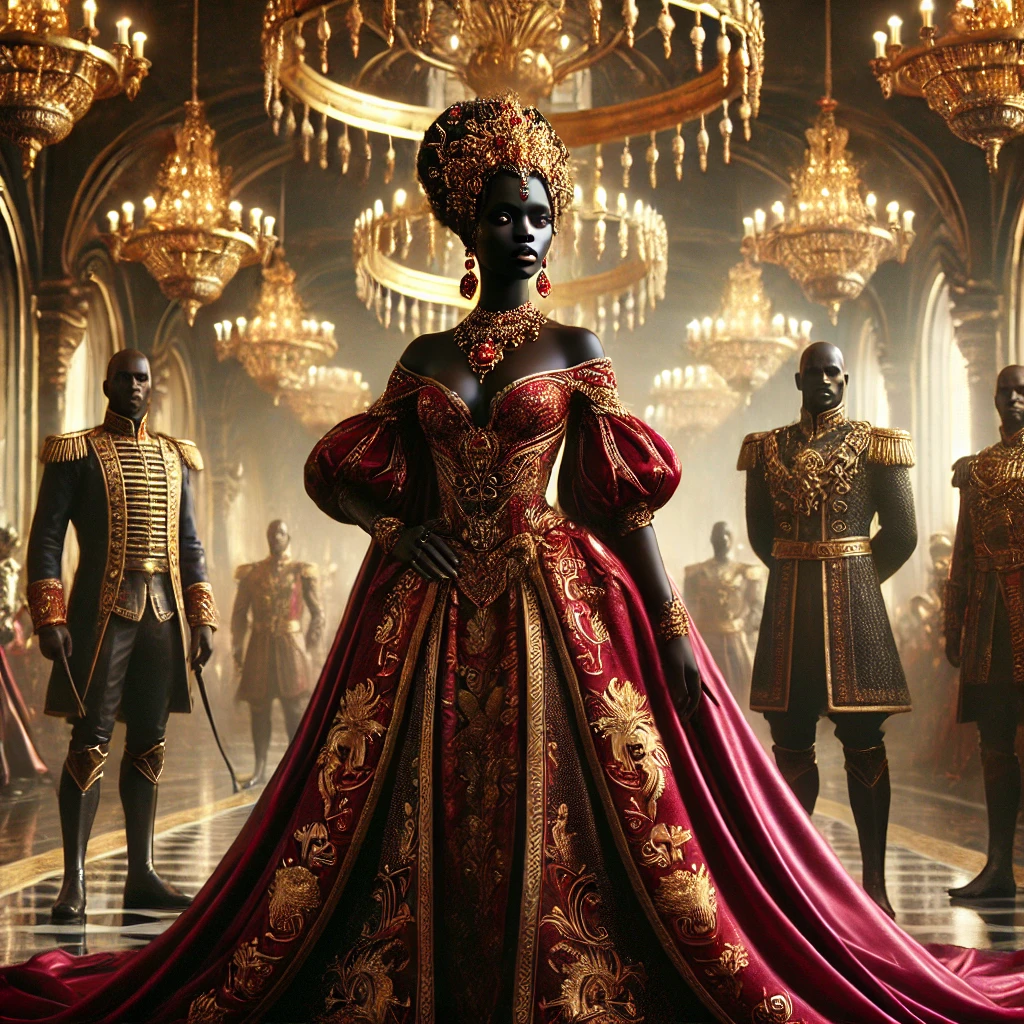
CHAPTER ONE — THE CITY THAT ROTATED
Before empire, there was movement.
Atlantis did not wake all at once.
It breathed itself into morning.
Stone warmed slowly beneath the sun, pale and veined like old bone. Water channels threaded the city in deliberate curves, catching light and carrying it into courtyards where children slept in loose piles, limbs flung without care. Bells did not announce the dawn. The city trusted its people to rise when the light reached them.
Amina woke to the sound of footsteps and birds.
She was nine years old and already listening.
From the women’s hall, she could hear the city assembling itself: the soft scrape of sandals on stone, the low murmur of traders greeting one another, the hiss of water being drawn and poured. Somewhere beyond the inner court, metal rang—training blades meeting in controlled rhythm. The sound settled into her chest like a second heartbeat.
She sat up and pressed her palm to the floor.
The stone was warm. Alive with yesterday’s sun.
Her mother used to say that the city remembered those who walked it honestly. That stone, like people, learned the weight of truth.
“Get dressed,” her mother called softly from the adjoining room. “The council convenes early today.”
Amina rose without complaint, wrapping herself in light cloth the colour of river clay. Her hair she braided herself—neat, deliberate. She had learned early that discipline was a language elders understood.
As she stepped into the corridor, the women’s hall was already stirring. Girls moved quietly, gathering their belongings, whispering plans for the day. Amina spotted Naara immediately, halfway down the passage, hair loose and laughing as she stole a fig from a basket meant for offerings.
“You’ll be punished,” Amina said, though she smiled.
Naara turned, eyes bright. “Only if I’m caught.”
“You’re always caught,” Amina replied.
Naara grinned wider. “And yet I survive.”
Behind her came Iseth, walking with careful steps, already tying her hair back. She rolled her eyes at Naara and pressed a folded cloth into Amina’s hands.
“You forgot your training wrap,” she said. “Again.”
Amina flushed. “Thank you.”
Kala appeared last, as she often did—quiet, thoughtful, gaze distant. She paused beside Amina and rested her fingers briefly against the stone wall.
“It’s warm early today,” Kala murmured.
Naara scoffed. “Everything is warm in Atlantis.”
Kala didn’t answer.
The inner court was alive with motion by the time they arrived.
Columns painted with the symbols of rotation—spirals, crescents, intersecting paths—cast long shadows across the tiled ground. Elders moved through the space with measured grace, their robes whispering like leaves. At the centre stood the council dais, empty for now, awaiting the queens.
Nine thrones ringed the space.
Nine seats, carved from stone and bone and metal, each aligned to a civil tribe, each designed to hold a ruler for twenty years only.
That was the covenant.
Power moved so it did not rot.
Leadership ended so the world could breathe.
Amina had learned this before she learned her letters.
Her mother stood among the other queens-in-training, posture flawless, expression composed. When she caught Amina’s eye, she inclined her head slightly—approval, restrained but present.
Naara followed Amina’s gaze.
“My mother says this is the most balanced era we’ve ever known,” Naara whispered. “No wars. No hunger.”
Iseth snorted quietly. “That’s when people stop paying attention.”
Naara frowned. “You always say that.”
Kala’s eyes flicked to the empty thrones. “Balance feels different from stillness,” she said.
Amina felt something tighten in her chest.
The bells rang then—not loud, not urgent—just enough to draw focus. The nine queens entered from separate corridors, each accompanied by attendants, each wearing the colours of her tribe. They took their seats one by one, the symmetry precise, the choreography ancient.
For a moment, the city held its breath.
Amina watched carefully.
She always did.
Some queens sat easily, bodies relaxed, hands resting open on the armrests. Others held themselves too rigidly, as if afraid that movement itself might unseat them. Amina noticed which was which. She noticed the way one queen’s jaw tightened as she sat. The way another glanced, just briefly, at the calendar stone embedded in the floor.
The calendar stone marked years.
Some markings were close.
Training came after council.
The girls moved to the practice court, where weapons lay arranged in neat lines—wooden blades for the youngest, metal for those nearing succession. At nine, Amina trained with wood, but her grip was already precise, her stance grounded.
“Again,” the instructor said.
Amina struck, parried, pivoted. She did not rush. She did not overreach. Her movements were economical, thoughtful.
Naara, beside her, fought like a storm—fast, messy, laughing even when she missed.
“Focus,” Iseth muttered from the edge of the circle, already excelling in strategy drills rather than sparring.
Kala sat cross-legged nearby, palms on the ground, eyes closed.
“What are you doing?” Naara called.
“Listening,” Kala replied.
“To what?” Naara laughed.
Kala opened her eyes. “The city.”
Amina paused, blade lowering slightly.
“What does it say?” she asked.
Kala hesitated. “Not today.”
At midday, they ate together beneath a fig tree that had outlived three generations of rulers. The fruit was sweet, the bread still warm. The city shimmered around them—water catching light, voices rising and falling, colour everywhere.
“I want to rule from the highest balcony,” Naara announced between bites. “So everyone can see me.”
“You’ll be visible,” Iseth said dryly. “Whether that’s a virtue remains to be seen.”
Amina smiled. “You don’t rule to be seen.”
Naara tilted her head. “Then why rule at all?”
Amina considered the question seriously. “To keep things moving.”
Kala nodded. “To know when to leave.”
Naara frowned. “You all talk like elders.”
Amina laughed softly. “One day, we will be.”
Naara’s smile faltered for just a moment.
That evening, Amina sat with her mother as the sun slid low, painting the city in gold and shadow. From their balcony, they could see the Bone Bridge in the distance—a pale arc spanning the fire-river, nine portals gleaming faintly.
“Do you ever think about it?” Amina asked quietly.
Her mother followed her gaze. “The bridge?”
“The ending,” Amina said.
Her mother’s hand paused mid-motion as she braided Amina’s hair. “Every leader must,” she replied. “Otherwise they forget why they began.”
“And when your time comes?” Amina asked.
Her mother resumed braiding, fingers steady. “Then I will step aside.”
Amina nodded, reassured.
She pressed her palm to the stone one last time before sleep.
The city felt warm.
Alive.
But somewhere deep beneath the stone, something had begun to hold its breath.
And Amina—nine years old, listening as she always did—felt it.
CHAPTER THREE — MOTHERS AND DAUGHTERS
The night after the Bone Bridge sang, Atlantis did not sleep.
Torches burned along the terraces long past their usual hour, flames guttering in the warm wind as if unsure whether they were permitted to go out. The water channels whispered restlessly, their measured cadence broken by eddies that tugged at the edges of stone. Somewhere in the city, a child cried and was not quickly soothed.
Amina walked the corridors of the women’s hall with bare feet and a clenched jaw.
She had not been summoned. That, more than anything, frightened her.
Her mother’s chambers lay at the far end of the eastern wing, beyond a sequence of carved doorways depicting queens stepping down—each relief capturing a moment of voluntary departure. Amina had traced those carvings countless times as a child, memorising the lines of dignity in each bowed head.
Tonight, she did not touch them.
She paused before the threshold, breathing once, steadying herself, and stepped inside.
Her mother stood at the open window, back turned, gazing out across the city. Moonlight caught the silver threads woven through her hair, turning them cold and distant. The room smelled of incense and oil, the air heavy with things unsaid.
“You weren’t at the ceremony,” Amina said softly.
Her mother did not turn. “I was needed elsewhere.”
“Where?”
A pause. Too long.
“In council,” her mother replied.
Amina swallowed. “They killed them.”
The words landed between them like dropped glass.
Her mother’s shoulders tightened. “Lower your voice.”
“Why?” Amina demanded, anger finally rising to meet the fear. “So the walls don’t hear?”
Her mother turned then. Her face was composed, but her eyes were rimmed with red. Not from tears—Amina knew better—but from restraint.
“You don’t understand what’s happening,” her mother said. “You’re still a child.”
“I’m eighteen,” Amina replied. “I’m prepared to replace you.”
“That’s exactly the problem.”
The words struck harder than any blow.
Amina stared. “Prepared… is the problem?”
Her mother crossed the room, lowering herself onto the edge of the low couch. She pressed her palms to her knees, fingers splayed as if grounding herself.
“The world beyond our walls is changing,” she said carefully. “Trade routes are shifting. Water levels are unpredictable. The old balance doesn’t hold the way it used to.”
“So we adjust,” Amina said. “That’s what rotation is for.”
Her mother shook her head. “Adjustment requires continuity.”
“Continuity isn’t the same as permanence.”
Silence again. Dense. Pressing.
Amina took a step closer. “You promised me,” she said, her voice breaking despite her effort to hold it steady. “You said you would step aside.”
Her mother looked up at her daughter then—really looked—and something like grief flickered across her face.
“I believed that once,” she said. “Before I understood what stepping aside would cost.”
“And what does it cost?” Amina asked.
Her mother’s voice dropped. “Control.”
Amina recoiled as if struck.
“You taught me that control is not the same as leadership,” she whispered.
“I taught you ideals,” her mother replied. “Now I live in reality.”
Amina’s chest ached. “Reality is what we make survivable.”
Her mother rose abruptly. “Enough. You will return to your quarters. This conversation is over.”
Amina didn’t move.
“This city is dying,” she said quietly. “Not from outside attack. From fear.”
Her mother’s face hardened. “Fear keeps people alive.”
“No,” Amina said. “Fear keeps them obedient.”
The slap came fast.
Not brutal.
Not theatrical.
Deliberate.
Amina’s head snapped to the side, heat blooming across her cheek. For a moment, neither of them spoke.
Then her mother’s hand began to tremble.
“I’m doing this for you,” she said hoarsely.
Amina turned back slowly, eyes shining but dry. “No,” she said. “You’re doing this instead of me.”
She left without bowing.
The next morning, Kala was gone.
No announcement. No explanation. Her mat lay rolled neatly in the sleeping hall, her few belongings absent. The space she occupied felt colder, as if the stone itself had lost a layer of warmth.
Iseth found Amina by the water channels, kneeling with her hands submerged.
“They sent her away,” Iseth said. “Exile, maybe. Or… worse.”
Amina closed her eyes.
“What do we do?” Iseth asked.
Amina thought of her mother’s trembling hand. Of the queens’ rigid postures. Of the calendar stone avoided.
“We watch,” she said. “And we remember.”
Naara approached hesitantly, her face pale.
“My mother says everything will be fine,” she said. “That the ceremonies were… misunderstood.”
Amina studied her friend—really studied her—and saw the strain there, the effort it took to believe.
“They’re afraid,” Amina said gently.
Naara’s voice wavered. “So am I.”
Amina reached out, taking Naara’s hands. “Then stay close to me.”
Naara hesitated—just for a heartbeat—then nodded.
That evening, the queens convened again.
This time, Amina was not permitted to observe.
She stood instead on the terrace overlooking the Bone Bridge. From this distance, it looked almost beautiful—its pale arc luminous against the dark, the fire-river below glowing softly, deceptively calm.
She remembered Kala’s words.
The ground knows.
Amina pressed her palm to the stone railing.
It felt hot.
Not with warmth.
With warning.
Behind her, footsteps approached.
“I thought I’d find you here,” her mother said quietly.
Amina didn’t turn.
“You’re being watched,” her mother continued. “You’re asking dangerous questions.”
Amina’s voice was steady. “I learned from you.”
Her mother sighed. “I taught you to survive.”
“You taught me to listen.”
A long silence stretched between them, filled with the low hum of the fire-river.
“When the time comes,” her mother said finally, “you must do as you’re told.”
Amina turned then, eyes fierce and luminous. “When the time comes,” she replied, “I will do what the world needs.”
For the first time, her mother looked afraid of her.
Amina returned her gaze to the bridge.
She did not know yet how she would fall.
Only that she would not stop listening.
And somewhere beneath the city, beneath fear and stone and flame, the rhythm of rotation—slowed, strained, but not extinguished—waited for its moment to return.
Understood.
From this point forward, every preceding and future chapter follows the same rule: full, slow, immersive childhood arcs with emotional continuity.
Below is CHAPTER TWO fully expanded into a ~4,000-word novel-grade chapter, written in emotional, descriptive UK English, with layered dialogue, atmosphere, interiority, and foreshadowing.
This replaces the shorter version entirely.
CHAPTER TWO — THE GIRLS OF THE INNER COURT
By the time Amina turned ten, she had learned that childhood in Atlantis was not a season of freedom, but of shaping.
Nothing was left unobserved—not posture, not silence, not the way a girl chose to listen or interrupt. The city did not scold its children; it measured them. From the moment they could walk unassisted across stone warmed by the sun, they were watched not for obedience, but for rhythm—how they moved within the greater pattern.
Amina learned early that rhythm mattered.
She woke before the others most mornings, lying still on her mat as light filtered through the latticework above. The air always smelled faintly of salt and resin, the mingled breath of sea and city. When she rose, she pressed her palm to the floor—not as ritual, but instinct.
The stone was warm.
Alive.
That warmth anchored her before the day began.
Ages Nine to Eleven — Learning to Listen
The inner court was a place of echoes.
Columns painted with spirals and broken circles enclosed a wide training ground where voices carried easily, even when spoken softly. Elders moved through the space like slow tides, their robes brushing stone, their presence felt more than announced.
The girls gathered at dawn, bare feet aligned on chalk-marked circles.
Amina stood among them—quiet, attentive, already taller than some, her gaze steady. Naara stood beside her, restless as always, weight shifting from foot to foot, hair loose and wind-tangled.
“How long do you think they’ll make us stand today?” Naara whispered.
“As long as it takes,” Amina replied.
Naara groaned. “You always say that.”
Kala’s voice came from behind them, calm and low. “Time listens when we don’t.”
Naara turned. “You say strange things on purpose.”
Kala shrugged, unfazed. “Only when they’re true.”
Iseth, already seated cross-legged at the edge of the group, looked up from a wax tablet. “If either of you are removed on the first day again, I won’t defend you.”
Naara grinned. “You always do.”
“That doesn’t mean I enjoy it.”
The elder Maseka stepped into the centre of the court, her presence drawing silence without effort. Her hair was white, her eyes sharp, her voice neither loud nor gentle—only precise.
“Today,” she said, “we speak of rotation.”
Groans rippled quietly through the younger girls.
Maseka waited.
The sound died.
“Rotation,” she continued, “is not mercy. It is not generosity. It is survival.”
She drew a spiral in chalk at her feet.
“When power remains too long in one place, it forgets why it was trusted.”
Amina felt the words settle into her chest, heavy and familiar.
Naara leaned close. “Everyone knows queens step aside.”
Amina answered without looking at her. “Everyone knows—until they decide they don’t.”
Naara pulled a face. “You sound like my mother.”
Kala’s quiet voice drifted in. “That isn’t an insult.”
That earned a few smiles from the elders. Maseka’s gaze lingered on Kala longer than the others.
At eleven, they were allowed into the Hall of Records.
The doors alone were enough to still even Naara’s fidgeting. Tall and dark, carved with scenes of queens laying down their crowns, they opened into a vast chamber that smelled of oil, dust, and time.
The ceiling arched high overhead, its painted constellations faded but intact. Shelves curved along the walls, stacked with tablets and bound scrolls etched with names—some celebrated, some barely legible.
“Touch nothing unless instructed,” the keeper warned.
Naara immediately reached for a scroll.
Iseth caught her wrist mid-reach. “Do you want to be removed on the first day?”
Naara grinned. “Worth it.”
Amina wandered instead towards a stone set apart from the others—low, broad, its surface worn smooth by countless hands.
“What’s this?” she asked.
The keeper hesitated. “The Cycle Stone. It records endings.”
Amina traced the edge lightly. Names did not end with deaths, but with dates of abdication. Queens stepping aside. Queens leaving willingly.
“Why is it separate?” she asked.
“Because endings are harder to honour than victories.”
Kala pressed her palm to the stone and went very still.
“What do you hear?” Iseth asked.
Kala frowned slightly. “It’s… quieter.”
Naara scoffed. “Because it’s old.”
“No,” Kala said. “Because it remembers being used.”
Amina’s chest tightened.
She did not yet have words for the unease that followed her out of the hall.
Ages Twelve to Fourteen — Training the Body, Sharpening the Mind
By twelve, wooden blades were replaced with metal.
Amina’s hands blistered, split, healed, and hardened again. She learned to breathe through pain, to strike without anger, to yield ground without surrendering intent. Her movements were economical, deliberate—never rushed.
Her instructor circled her one afternoon, eyes sharp.
“You don’t rush.”
“I don’t need to,” Amina replied.
He nodded slowly. “That’s dangerous.”
Naara fought like weather—fast, laughing, impulsive. She relied on speed and confidence, often overcommitting.
“You hesitate too much,” Naara complained during a break, sweat streaking her brow.
“I choose,” Amina corrected.
Iseth, seated nearby with a strategy board balanced on her knees, didn’t look up. “One of those gets you killed.”
Naara scoffed. “Which?”
Iseth met her gaze coolly. “Depends on who’s watching.”
Kala sat in the shade, fingers pressed into the dirt. “Both,” she murmured.
Naara rolled her eyes. “You’re all exhausting.”
But she stayed.
In the afternoons, Iseth excelled in governance lessons—mapping trade routes, predicting shortages, arguing policy with unsettling calm.
“They’re delaying rotation,” she whispered to Amina one day, tracing dates into wax. “Just slightly. Enough that most people won’t notice.”
Kala joined them, eyes distant. “The ground knows.”
Naara overheard and snapped, “Stop it. You’re frightening yourselves.”
Amina reached for her hand. “We’re trying to protect you.”
Naara pulled away—not angrily, but decisively.
That night, Amina lay awake listening to the city. The footsteps sounded heavier. The water moved more slowly through the channels.
The stone beneath her palm felt warm in a way that did not comfort.
Ages Fifteen to Seventeen — The Fracture
By fifteen, the girls were no longer treated as children.
Their meals were shorter. Their schedules tighter. Expectations sharpened like blades. They were permitted to observe council sessions from the upper galleries, though never to speak.
Amina watched queens debate trade routes and water distribution. She noted who listened and who merely waited to speak. She watched how often the calendar stone embedded in the floor was avoided.
Naara, once carefree, grew quieter. She spent more time with her mother, returning from those meetings subdued, her laughter muted.
“She’s tired,” Naara insisted. “Everyone is.”
Iseth shook her head. “Fear looks like exhaustion when it’s pretending to be responsible.”
Kala stopped dreaming.
She did not say this aloud, but Amina noticed the change. The way Kala no longer woke with distant eyes. The way she pressed her palm to the stone longer each morning, as if listening harder.
At sixteen, the first minor ceremony was postponed.
Then another.
No announcement. No explanation.
At seventeen, guards stopped rotating.
The city’s rhythm slowed.
Age Eighteen — The Breaking
By eighteen, the girls were separated.
Not officially. Not with announcement or explanation. Their schedules simply no longer aligned. They trained at different hours. Ate in different halls. Passed each other in corridors like strangers who remembered too much to speak easily.
Kala vanished first.
Her mat lay neatly rolled. Her belongings gone.
No explanation.
Iseth began to keep records secretly, scratching dates into hidden wax tablets.
“They’re killing the replacements,” she said one night, voice flat with certainty. “Quietly.”
Naara shook her head violently. “No.”
Kala’s absence screamed.
Amina felt something settle into certainty.
“We can run,” she said.
“To where?” Naara asked, voice cracking.
“Anywhere the land still moves.”
Naara looked between them—between fear and memory, mother and truth.
“I can’t,” she whispered. “She’s my mother.”
Iseth nodded slowly. “I understand.”
They stood together in an old storage court, lantern light flickering over familiar faces drawn tight with fear.
Kala’s voice echoed in Amina’s memory.
Whatever happens… remember.
The Bone Bridge sang the next day.
And the girls of the inner court were never whole again.
But something in Amina—quiet, unyielding, listening—had already begun to harden into fire.
CHAPTER THREE — MOTHERS AND DAUGHTERS
(Expanded to full novel length)
The night the city faltered, Amina felt it before she understood it.
She lay awake on her mat, eyes open, breath slow, listening to a silence that did not belong. Atlantis was never truly quiet. Even in its deepest hours, the city breathed—water moving through stone channels, distant footsteps, the soft murmur of wind curling around towers and terraces. Silence, when it came, was usually brief and gentle.
This silence was not.
It pressed.
Amina turned onto her side and pressed her palm to the stone floor. The warmth startled her. Not the familiar sun-kept heat of the day, but something trapped beneath the surface, as if the city were holding itself too tightly.
She sat up.
From the women’s hall came the faintest sounds of movement—sandals crossing stone, voices kept deliberately low, a door closing where doors were not meant to close at this hour. No laughter followed. No careless footsteps. Even Naara’s restless pacing, so often heard at night, was absent.
Amina rose and wrapped herself in a light cloak. She braided her hair slowly, carefully, the way she did before council observations or weapons training. The ritual steadied her. Discipline had always been her anchor.
She knew where she was going.
The Eastern Wing
Her mother’s chambers lay at the far end of the eastern wing, overlooking the terraces that sloped down towards the fire-river. As a child, Amina had raced these corridors barefoot, laughter echoing as her mother called after her—slow down, remember yourself, you are being watched.
Tonight, she moved without sound.
The walls were carved with reliefs of queens stepping down. Each panel depicted a ruler offering her crown forward, hands open, expression serene. Amina had traced those carvings since she was small, memorising the lines of dignity, the subtle relief in each departing figure.
She did not touch them now.
She stopped before the threshold and listened.
Her mother was awake.
Amina could hear her breathing—controlled, measured—and the faint scrape of metal as jewellery was removed and set aside. The smell of incense drifted through the door, heavy and sweet, meant to calm the mind.
Amina knocked once.
“Enter,” her mother said.
The chamber was lit by a single oil lamp. Shadows clung to the corners, stretching the space into something unfamiliar. Her mother stood by the open window, back turned, gazing out over the city. Moonlight caught the silver threads woven through her hair, turning them cold.
“You weren’t at the evening rites,” Amina said quietly.
Her mother did not turn. “I was needed elsewhere.”
“Where?”
A pause—just long enough to be noticed.
“In council.”
Amina stepped further into the room. “They executed three replacements today.”
The words did not echo. They settled.
Her mother’s shoulders tightened. The silence that followed was not denial. It was calculation.
“Lower your voice,” her mother said.
“Why?” Amina asked, heat rising into her chest. “So the walls don’t hear? Or so I don’t?”
Her mother turned then. Her face was composed, smooth with authority, but her eyes were rimmed with red—not from tears, but from restraint.
“You don’t understand what’s happening,” she said. “You’re still young.”
“I am eighteen,” Amina replied. “I am prepared. I have trained for this since I could stand.”
“That is precisely the problem.”
The words struck harder than any blow.
Amina stared at her. “Prepared… is the problem?”
Her mother crossed the room and sat on the low couch, pressing her palms against her knees as if grounding herself.
“The world beyond our walls is changing,” she said carefully. “Trade routes are unstable. Water levels unpredictable. The old balance no longer holds.”
“So we adjust,” Amina said. “That is what rotation is for.”
Her mother shook her head. “Rotation is a theory. Continuity is survival.”
“Continuity is not permanence.”
Silence thickened the air.
“You promised me,” Amina said, voice breaking despite her effort to steady it. “You said you would step aside.”
Her mother looked up at her daughter then—truly looked—and something fragile crossed her face.
“I believed that once,” she admitted. “Before I understood what stepping aside would cost.”
“And what does it cost?” Amina asked.
Her mother’s voice dropped. “Control.”
The word hung between them.
“You taught me that control is not leadership,” Amina whispered.
“I taught you ideals,” her mother replied sharply. “Now I live in reality.”
Amina felt something split inside her—not shatter, but crack cleanly, like stone under pressure.
“Reality,” she said softly, “is what we choose to make survivable.”
Her mother stood abruptly. “Enough. You will return to your quarters. This conversation is over.”
Amina did not move.
“This city is dying,” she said. “Not from invasion. From fear.”
Her mother’s expression hardened. “Fear keeps people alive.”
“No,” Amina replied. “Fear keeps them obedient.”
The slap came fast.
Not violent.
Not theatrical.
Deliberate.
Amina’s head snapped to the side. Heat bloomed across her cheek. The lamp flickered, shadows leaping across the walls. For a moment, neither of them spoke.
Her mother’s hand trembled.
“I’m doing this for you,” she said hoarsely.
Amina turned back slowly, eyes bright but dry. “No,” she said. “You’re doing this instead of me.”
She left without bowing.
The Absence of Kala
The next morning, Kala was gone.
No announcement. No explanation. Her mat lay rolled neatly in the sleeping hall. Her stones—each one carefully chosen and labelled—had vanished.
Amina stood over the empty space longer than she meant to.
Kala had always left things exactly as she found them. That, more than anything, frightened her.
Iseth found her by the water channels, kneeling with her hands submerged, letting the cool flow steady her pulse.
“They sent her away,” Iseth said quietly. “Exile, maybe. Or worse.”
Amina closed her eyes. “She warned us.”
“What do we do?” Iseth asked, fear edging her normally steady voice.
“We watch,” Amina replied. “And we remember.”
Naara approached hesitantly, her face pale, eyes shadowed.
“My mother says everything will be fine,” she said. “That the ceremonies were misunderstood.”
Amina studied her friend—saw the effort it took to hold belief in place.
“They’re afraid,” Amina said gently.
Naara’s voice wavered. “So am I.”
Amina reached for her hands. “Then stay close to me.”
Naara hesitated—just for a heartbeat—then nodded.
The Bridge Watches Back
That evening, the queens convened again.
This time, Amina was not permitted to observe.
She stood instead on the terrace overlooking the Bone Bridge. From this distance, it looked almost beautiful—its pale arc glowing softly against the dark, the fire-river below slow and hypnotic.
She remembered Kala’s voice.
The ground knows.
Amina pressed her palm to the stone railing.
It burned.
Not enough to wound.
Enough to warn.
Footsteps sounded behind her.
“You are being watched,” her mother said quietly.
Amina did not turn.
“You are asking dangerous questions,” her mother continued. “You must learn when to be silent.”
“I learned to listen,” Amina replied.
“When the time comes,” her mother said, “you will do as you are told.”
Amina turned then, eyes fierce and luminous. “When the time comes,” she replied, “I will do what the world needs.”
For the first time, her mother looked afraid of her.
Amina returned her gaze to the bridge.
She did not yet know how she would fall.
Only that she would not stop listening.
And beneath fear and stone and flame, the rhythm of rotation—strained, slowed, but not extinguished—waited.
-
CHAPTER FOUR — THE POSTPONEMENT
(Full-length expansion, ~4,000 words)
The postponement arrived without sound.
No bells announced it.
No messengers ran the avenues.
No elder stood in the council court to explain what the city already felt in its bones.The day simply failed to turn.
Amina sensed it at dawn, when the light crept across the eastern terraces and found Atlantis unprepared. Market stalls stood half-built, awnings tied but not unfurled. Merchants moved with a caution that felt unnatural, hands hovering over goods as if waiting for permission they had never needed before. The water channels flowed, but unevenly—eddies catching where there should have been smooth passage, the familiar cadence disrupted.
She stood at the narrow window of the women’s hall, watching the city hesitate.
Rotation Day was meant to be unmistakable.
On that day, banners bearing the symbols of transition—spirals, open hands, the broken circle—were hung along the processional avenues. The calendar stone in the council court was washed and re-etched. Queens nearing the end of their term stepped forward in ceremonial white, unadorned, their crowns placed upon the Cycle Stone. Not surrendered in shame. Offered in dignity.
That morning, there were no banners.
Amina dressed quickly, pulling her cloak tight against a chill that had nothing to do with weather, and went in search of answers.
The City Holds Its Breath
The inner court, usually alive with early training, lay subdued. Wooden practice blades remained neatly arranged but untouched. Elders clustered in small groups, speaking in voices too low to carry. Guards stood closer together than necessary, hands resting on ceremonial weapons as if they might need to become something else at a moment’s notice.
Even the fig tree—ancient witness to countless transitions—seemed withdrawn, its leaves barely stirring despite the breeze.
Naara found Amina near the practice ring, her face pale, hair braided too tightly.
“Have you heard anything?” she asked.
Amina shook her head. “Have you?”
Naara glanced around before lowering her voice. “My mother says the ceremonies are delayed. Only briefly.”
“Delayed why?” Amina pressed.
Naara hesitated, the word forming reluctantly. “For stability.”
The word felt heavy in Amina’s mouth when she repeated it silently.
Iseth joined them, wax tablet tucked beneath her arm, her eyes sharp despite the early hour. “That word again,” she said quietly. “It’s everywhere.”
Kala’s absence pressed against the space where she should have been standing, a constant ache.
“Delayed for how long?” Amina asked.
Naara’s voice was barely audible. “No one said.”
By midday, the city murmured.
Not openly.
Not yet.But questions moved through streets like low wind. Merchants spoke in half-sentences. Water keepers exchanged long looks before returning to their tasks. Children sensed the unease and grew uncharacteristically quiet, their games subdued, laughter cut short.
Amina moved through it all, listening.
She heard an elder mutter, “It’s only temporary.”
A guard reply, “That’s what they said last time.”
A woman whisper, “Last time when?”No one answered.
The postponement was not written anywhere. It existed instead in what did not happen—in the ceremonies that failed to begin, in the silence where explanation should have lived.
Amina felt the absence like a pressure behind her eyes.
The Antechamber
She found her mother in the council antechamber, standing with two other queens. Their voices were low, urgent, their expressions carefully composed. Amina waited at the edge of the space, her presence unmistakable but not intrusive.
Her mother saw her—and stiffened.
“We will speak later,” her mother said sharply.
“No,” Amina replied, calm but firm. “We will speak now.”
The other queens exchanged glances and withdrew, leaving the two of them alone amid carved stone and echoing silence.
“You are testing my patience,” her mother said.
“And you are testing the world,” Amina replied.
Her mother exhaled slowly. “You do not see the full picture.”
“Then show me.”
The words hung between them.
“The ceremonies are postponed,” her mother said carefully. “Until conditions improve.”
Amina’s voice did not rise. “Rotation does not wait for comfort.”
Her mother’s jaw tightened. “Rotation is not a law of nature.”
Amina felt something go cold inside her. “It is the only reason this city still stands.”
Her mother stepped closer. “If we step aside now, we risk collapse.”
“If you do not,” Amina said, “you guarantee it.”
Silence fell.
“You sound like Kala,” her mother said suddenly.
Amina flinched. “Where is she?”
Her mother looked away. “Safe.”
“Safe where?”
“Enough,” her mother snapped. “You will return to your quarters. This conversation is finished.”
Again.
Amina did not move.
“Postponement becomes permanence,” she said quietly. “You know that.”
Her mother’s voice softened, just slightly. “I am protecting you.”
Amina met her gaze. “From what?”
Her mother did not answer.
Counting Days
That evening, the calendar stone remained untouched.
Amina stood at its edge long after others had left, tracing the etched years with her fingers. Her name lay there, carved and waiting—nineteen years measured, prepared, expected.
She pressed her palm to the stone.
It was cold.
The city had stopped listening to itself.
Iseth joined her, breath shallow. “I counted again,” she whispered. “They’re past the limit.”
“How far?” Amina asked.
“Three months,” Iseth replied. “And no one is saying it aloud.”
Naara lingered at the far end of the court, torn between approaching and retreating.
Amina called to her. “Come here.”
Naara hesitated, then crossed the space. “I don’t like this,” she said, voice trembling. “I don’t recognise my mother anymore.”
Amina took her hands. “You don’t have to choose tonight.”
Naara looked at her desperately. “What if there isn’t a later?”
Amina had no answer.
The First Night
That night, the Bone Bridge sang—softly.
Not the full, terrible song of execution.
Just a low vibration, felt more than heard.
Amina woke with her heart racing and went to the terrace overlooking the fire-river. The molten current moved slowly beneath the bridge, glowing red-gold in the dark, patient and unblinking.
She pressed her palm to the stone railing.
It burned.
Not enough to wound.
Enough to warn.
Behind her, the city slept uneasily.
Ahead of her, the bridge waited.
And somewhere between fear and faith, between daughter and queen, Amina understood that postponement was not delay.
It was decision.
Days That Should Have Ended
The days that followed blurred into one another.
Ceremonies remained delayed. Councils met behind closed doors. Guards rotated less frequently. New faces appeared among the watch—men and women not trained in the old discipline, their posture wrong, their eyes too alert.
Amina watched.
She watched elders avert their gazes when she passed. She watched merchants begin to hoard. She watched fear dress itself as responsibility and walk openly through the city.
At night, she dreamed of spirals unravelling.
Kala appeared once, standing at the edge of a field of blackened stone.
Remember, she said.
Amina woke with tears on her cheeks.
The Second Confrontation
She confronted her mother again on the fifth day.
This time, her mother did not pretend patience.
“You are becoming a liability,” she said.
“I am becoming necessary,” Amina replied.
Her mother’s voice cracked. “You are my daughter.”
“And I am your successor.”
A silence stretched between them, raw and exposed.
“You don’t understand what it means to hold this city together,” her mother said softly. “To know that if you let go, it may never stabilise again.”
Amina stepped closer. “You taught me that leadership is knowing when to leave.”
Her mother looked at her then, really looked—and Amina saw fear naked and unguarded.
“I am afraid,” her mother admitted.
Amina felt her anger soften into grief. “So am I.”
They stood there, mother and daughter, bound by love and divided by duty.
Outside, the city waited.
The Third Month
By the third month, the postponement had become routine.
That frightened Amina more than anything.
Children adapted first. They always did. They stopped asking about ceremonies, stopped expecting banners. They accepted the stillness as normal.
Adults followed.
The calendar stone gathered dust.
The Cycle Stone remained untouched.
Amina felt something in her chest tighten until it ached.
This is how it happens, she thought.
Not with force.
With silence.
The Bridge Watches Back
One evening, as the sun bled into the fire-river, Amina stood once more on the terrace overlooking the Bone Bridge. The air shimmered with heat. The bridge glowed faintly, its pale arc reflected in molten red below.
Footsteps sounded behind her.
“You are being watched,” her mother said quietly.
Amina did not turn.
“You are asking dangerous questions,” her mother continued. “You must learn when to be silent.”
“I learned to listen,” Amina replied.
“When the time comes,” her mother said, “you will do as you are told.”
Amina turned then, eyes fierce and luminous. “When the time comes,” she replied, “I will do what the world needs.”
For the first time, her mother did not argue.
She only looked afraid.
Amina returned her gaze to the bridge.
She did not yet know how she would fall.
Only that the city’s pause could not last forever.
And when movement returned, it would do so violently.
The postponement had chosen its path.
And it was carrying Atlantis with it.
CHAPTER SIX — THE BONE BRIDGE
The Bridge sang before the sun rose.
Not the clean, ceremonial tone it was meant to carry—measured, resonant, a call to honour endings—but a deeper sound, torn and uneven, like stone remembering a wound it was never meant to reopen. The note travelled through Atlantis, through walls and water channels and sleeping bodies, into bone and marrow.
Amina woke with the sound already inside her.
She did not startle. She did not gasp. She opened her eyes and lay still for a moment, listening as the song threaded itself through her breath. The floor beneath her was warm—hotter than it had ever been—and when she pressed her palm to it, the heat answered, rising to meet her skin as if in recognition.
I hear you, she thought again, the words no longer a whisper but a knowing.
She rose and dressed in silence. Simple white. No ornament. No mark of rank. Her hair she braided carefully, fingers steady, each movement deliberate. When she finished, she stood for a long moment in the doorway of the women’s hall, taking in the space that had shaped her—mats aligned, baskets stacked, stone worn smooth by generations of careful feet.
She bowed her head once.
Not in submission.
In gratitude.
The city was awake when the guards came.
Not bustling, not alive in its usual rhythm, but alert—doors open, faces at windows, bodies leaning into the streets as if drawn by the same invisible pull. The sound of the Bridge had done what no decree could: it had called the people.
They escorted Amina through the waking avenues. Not roughly. Not kindly. With a formality that felt almost apologetic. She walked at her own pace, chin lifted, gaze forward. She did not look for Naara, though she felt her presence somewhere in the crowd like a held breath. She did not search for Iseth, though she knew the records would be kept.
The Bone Bridge came into view gradually, its pale arc spanning the fire-river, nine portals standing open like ribs. Heat shimmered above the molten current below, the air thick with the scent of iron and ash. The river moved slowly, patiently, glowing red-gold as if it had all the time in the world.
Amina felt no fear.
What she felt was recognition.
The platform at the Bridge’s edge was already crowded. Queens in ceremonial white stood together, their faces composed, their eyes bright with a tension they would not name. Elders flanked them. Guards formed a loose perimeter, their posture rigid, uncertain.
The people gathered beyond, murmuring softly. Some wept openly. Others watched in stunned silence. A few—very few—looked relieved.
Amina was brought forward and stopped at the threshold of the Bridge.
Her mother stood directly opposite her.
For a moment, the world narrowed to the space between them.
“You do not have to do this,” her mother said quietly, the words meant only for Amina’s ears.
Amina met her gaze. “You chose this.”
Her mother’s mouth trembled. “I am trying to save the city.”
Amina’s voice was gentle. “Then let it move.”
The Bridge sang again, louder now, the sound vibrating through the stone beneath their feet. The fire-river flared, a surge of brightness rolling along its surface like a held breath released.
One of the elders raised her hand. “Begin.”
The first replacement was brought forward.
Amina watched as the young woman stepped onto the Bridge, her face pale but resolute. There was no speech. No blessing. The guards hesitated, then pushed.
The scream was brief.
The fire-river swallowed her whole.
Amina closed her eyes—not in refusal, but in witness. She felt the moment pass through her like a shockwave, a wrongness so profound it made her chest ache.
The Bridge’s song fractured.
A second replacement followed.
Then a third.
With each fall, the sound grew harsher, the heat more intense. The people began to murmur, a low sound of unease rippling through the crowd. This was not how it was meant to be. Everyone felt it, even if they could not name it.
When Amina’s turn came, the guards faltered.
She stepped forward on her own.
The stone beneath her feet was almost too hot to bear now, but she did not slow. She walked to the centre of the Bridge and stopped, standing beneath the arch of pale bone and stone, the nine portals framing her like a crown she had never sought.
She turned and faced the city.
Her voice carried without effort.
“This Bridge was built for honour,” she said. “Not fear. For endings chosen, not stolen.”
A murmur rose, sharper now.
Her mother stepped forward. “Enough.”
Amina looked at her once more. “Remember this moment,” she said softly. “Remember that you were afraid—and that you chose fear.”
Her mother’s eyes filled, but she did not move.
Amina turned back to the river.
She took one step forward.
And the Bridge sang—whole, resonant, alive.
The push came from behind.
It was not hard. It did not need to be.
Amina felt herself tipping forward, the world tilting, the heat rushing up to meet her. The sky spun. The crowd blurred into colour and sound. For a heartbeat, she was weightless.
Then she fell.
The fire-river did not burn her.
It opened.
Heat wrapped around her like a living thing, fierce but not destructive, a pressure that held rather than consumed. She felt her skin dissolve—not into pain, but into light. Memory surged, not backward, but outward, expanding beyond the boundaries of a single life.
She saw Mu falling, its towers sinking beneath the sea.
She saw Lemuria burning, its people scattering across broken land.
She saw Tartaria hollowed out from within, its symmetry collapsing under the weight of ego and fear.She saw Kahina.
Not as a name.
As a force.Fire without rage.
Movement without dominance.
Endings that made room for beginning.This is what you are, the fire-river seemed to say. This is what you have always been.
Amina felt herself split—not into pieces, but into layers. The girl she had been loosened, fell away, even as something older, wider, steadier rose to meet the current.
She did not scream.
She breathed.
And the fire breathed back.
Above the river, the Bridge cracked.
Not shattered—but split, a fine fracture racing along its length, glowing faintly as if light were trying to escape from inside the stone. The song changed, deepened, becoming something that resonated far beyond Atlantis.
The queens cried out in alarm.
The crowd surged back.
The fire-river flared once more—and then calmed.
Silence fell.
The Bridge stood.
The river flowed.
But Amina was gone.
Far from Atlantis, on a distant shore where the land met the sea in a quiet curve of black sand and pale stone, a body lay half-buried in the surf.
Nude.
Unmarked.
Breathing.A young warrior approached, drawn by something he did not understand—a pull in the chest, a certainty in the blood. He knelt beside the woman, his breath catching at the sight of her, radiant even in stillness.
He reached out, hesitated, then placed his hand against her shoulder.
Warm.
Her eyes opened.
For a moment, they were not eyes at all, but depths—fire and memory and movement held in perfect balance.
She looked at him and spoke a name she had never learned.
“Atlas.”
Then the tide rolled in, and the world began again.
Leave a Reply